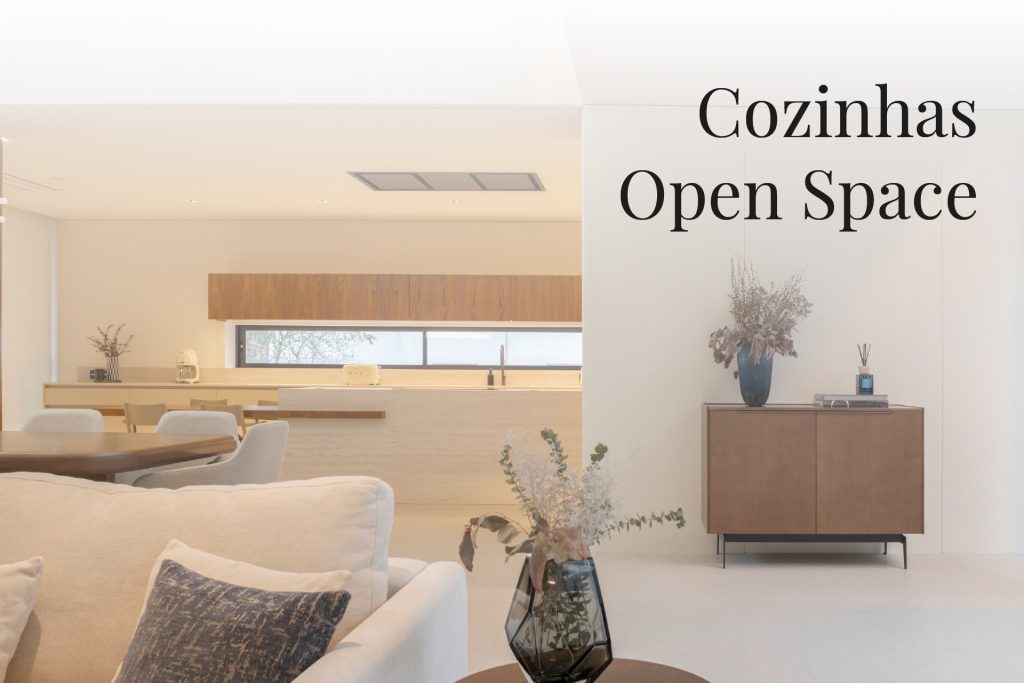
Open-concept kitchens have become a defining feature of contemporary homes and one of the most appreciated trends in interior design. Beyond their light and spacious appearance, this way of organizing a space makes it possible to improve daily routines, relationships, and the overall spatial experience.
However, there is a fine line between a fluid space and one that feels too exposed. That difference lies in the precision of the details and in the intentional planning of the layout.
If you are considering incorporating an open-concept kitchen into your next project, explore this article and discover what makes this layout as sophisticated as it is functional.
-
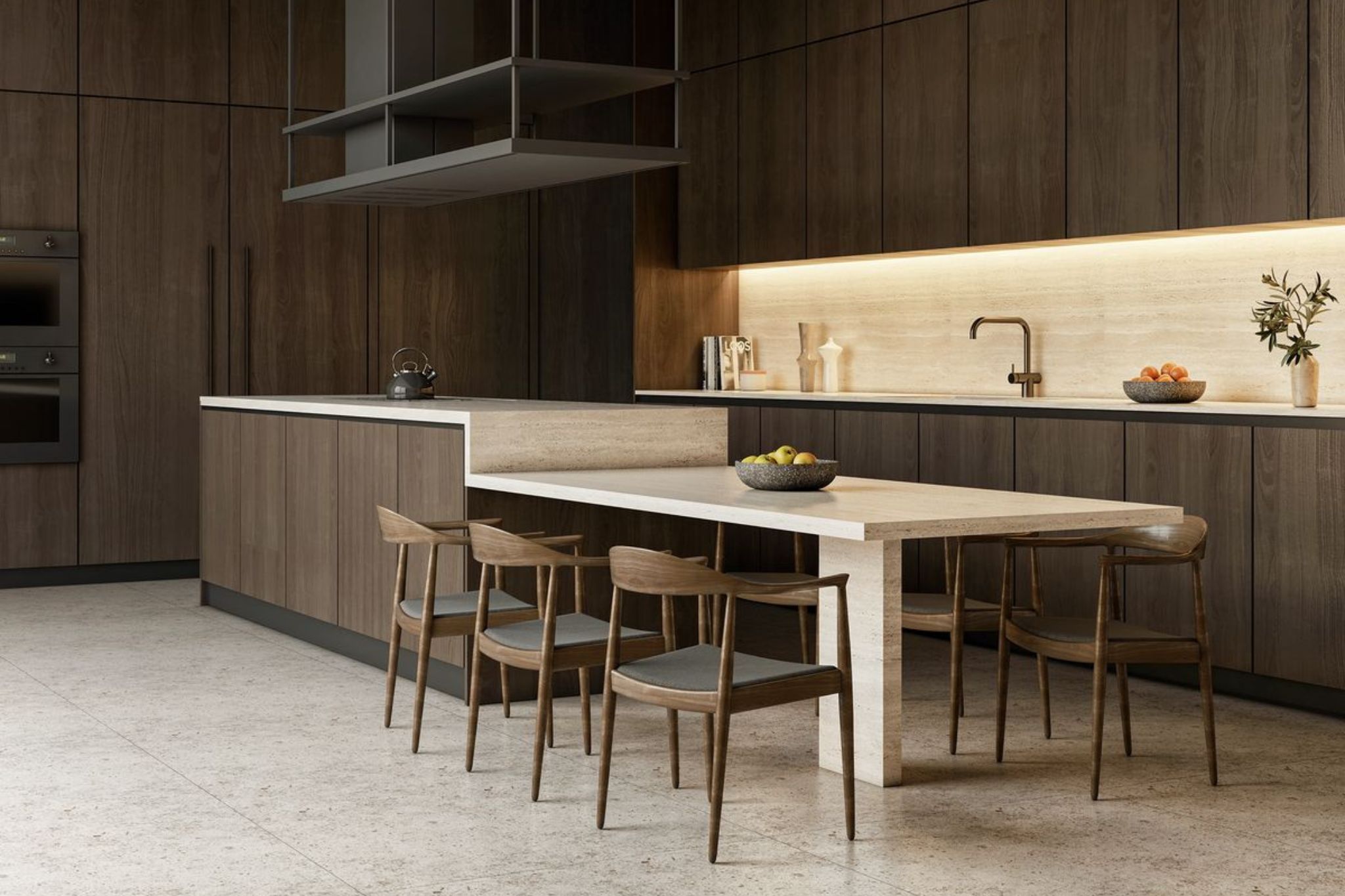
- Cozinhas Open Space | Fonte: Pinterest
The Open-Concept Kitchen
For decades, the kitchen was designed as a strictly functional space, reserved for meal preparation and set apart from the home’s social areas. As lifestyles evolved, that role changed, and the kitchen began to take on a more social presence, becoming a place for gathering and lingering.
It is within this context that the open-concept layout becomes a strategic choice, reshaping the way spaces relate to one another. When designed well, it allows for a subtle transition between functions, preserving comfort and order without compromising the unity of the overall space.
However, not every open-concept kitchen results in a balanced environment. The difference between a well-executed project and an improvised approach lies in the planning: in the clear definition of zones, the aesthetic integration with the social area, the technical control, and the attention to detail that ensures visual coherence and ease in everyday life.
-
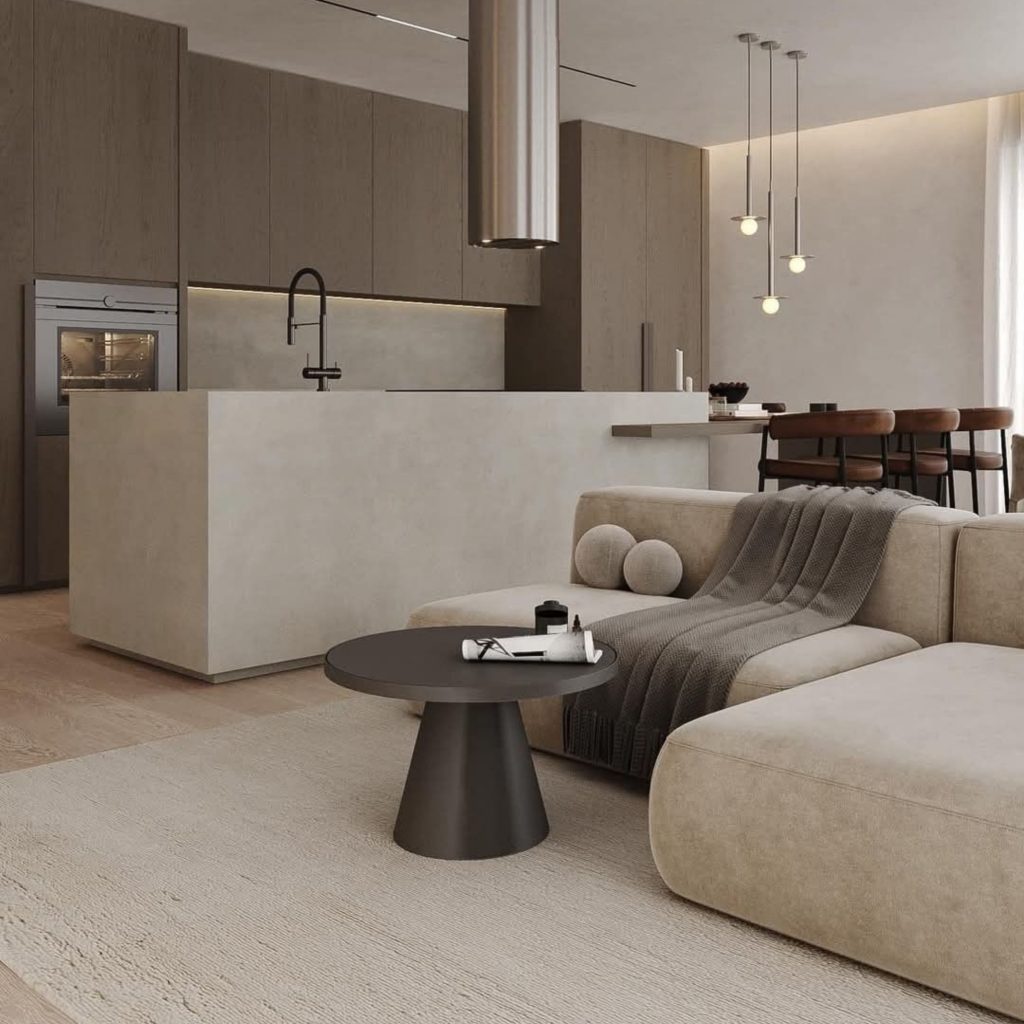
- Cozinha Integrada com a Sala de Estar, e Jantar | Fonte: Pinterest
-
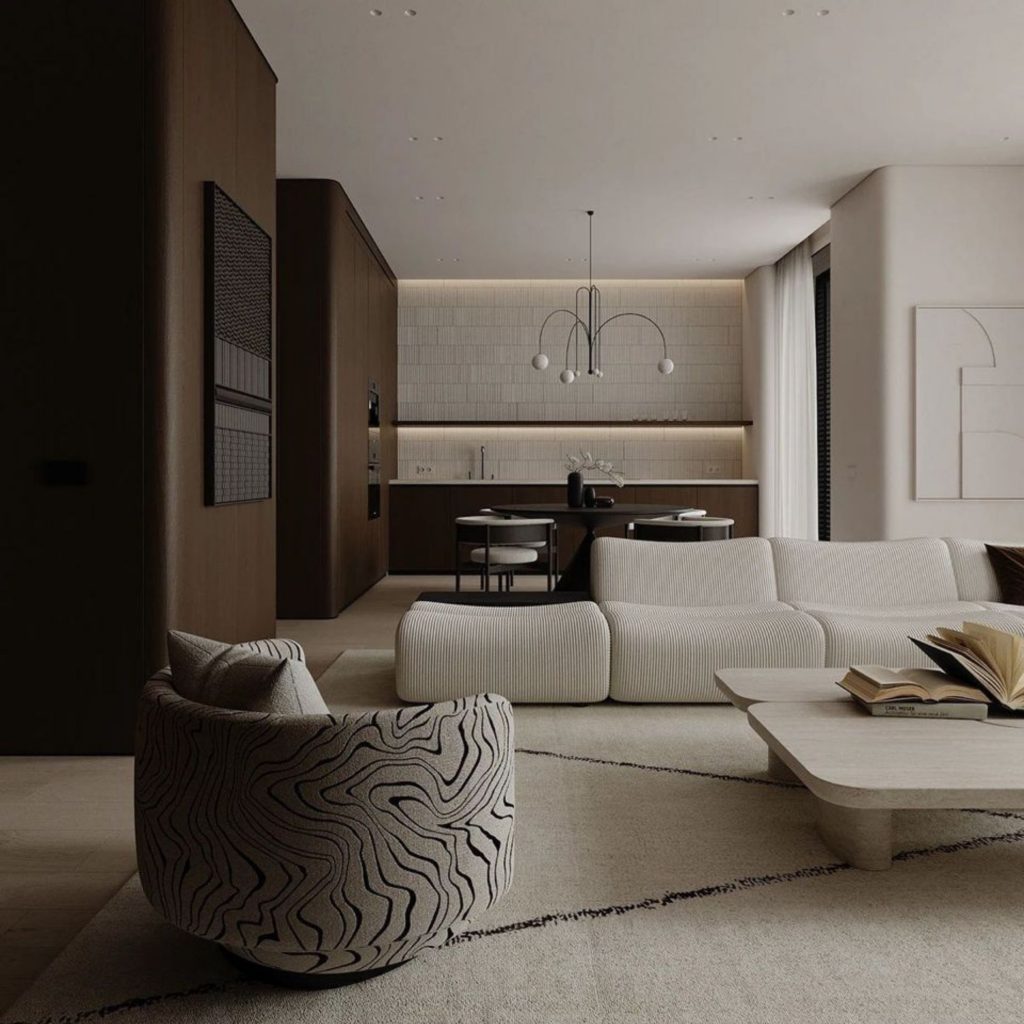
- Open Space Onde a Sala e a Cozinha se Fundem num Ambiente Contínuo | Fonte: Pinterest
Advantages and Disadvantages of Open-Concept Kitchens
Among the main advantages of open-concept kitchens is the visual continuity they bring to a space, creating a greater sense of openness and lightness. This layout also encourages a more generous flow of natural light, allowing it to spread evenly throughout the social area and contribute to brighter interiors.
Beyond visual impact, the open-concept layout responds to more informal lifestyles centered on connection, bringing together functions that were once separated. By removing physical barriers, the kitchen becomes part of the social life of the home, making it possible to prepare meals while talking, entertaining, or simply spending time together, all without leaving the space. When thoughtfully executed, this integration can also add value to the property and create a stronger sense of sophistication, associated with spaces that feel more open, cohesive, and contemporary.
However, choosing an open-concept kitchen also requires careful consideration of certain challenges. Controlling odors and smoke becomes essential, as does managing noise, since sound travels more easily in an open layout. Storage also takes on a central role, as everything happening in the kitchen remains visible, requiring rigorous and well-planned organizational solutions.
Finally, it is important to ensure aesthetic coherence so that each area within the open-concept layout feels naturally connected.
-
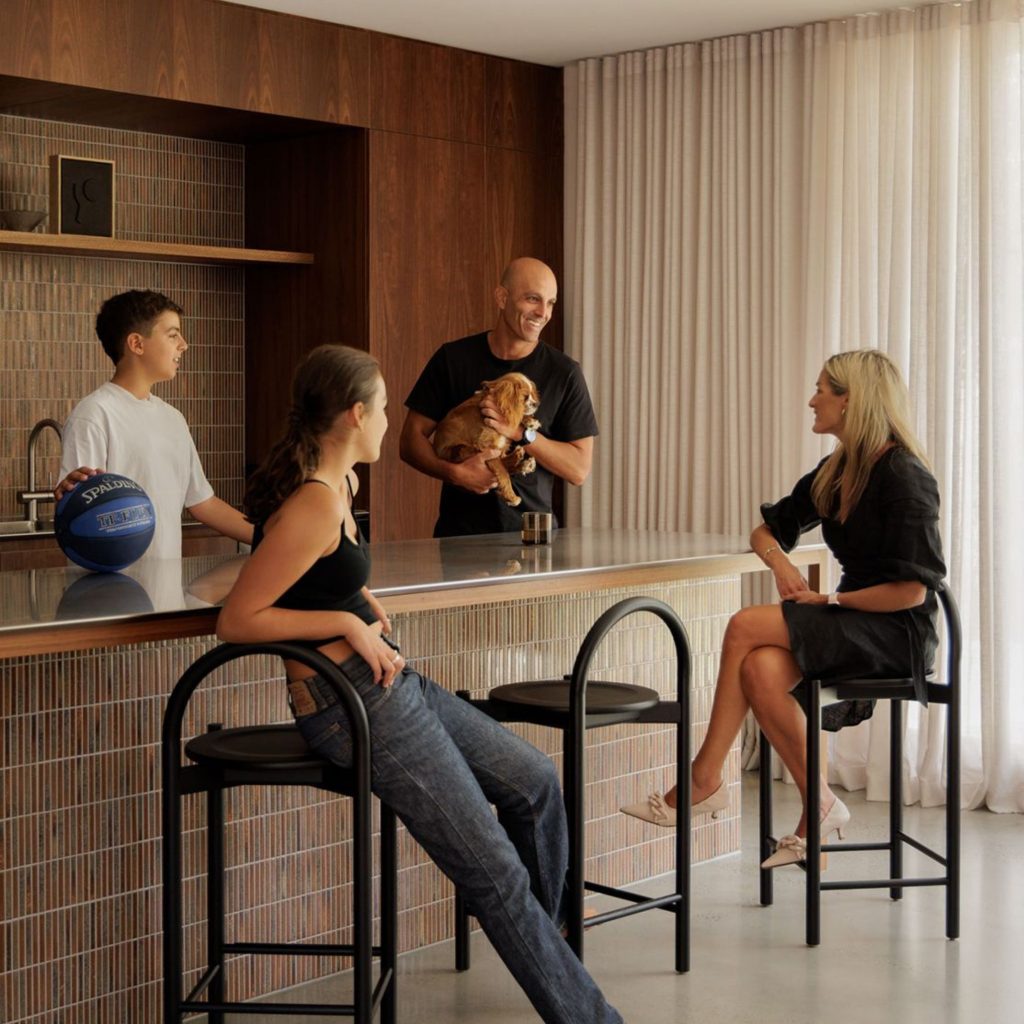
- Open Space Centrado na Convivência | Fonte: Pinterest
-
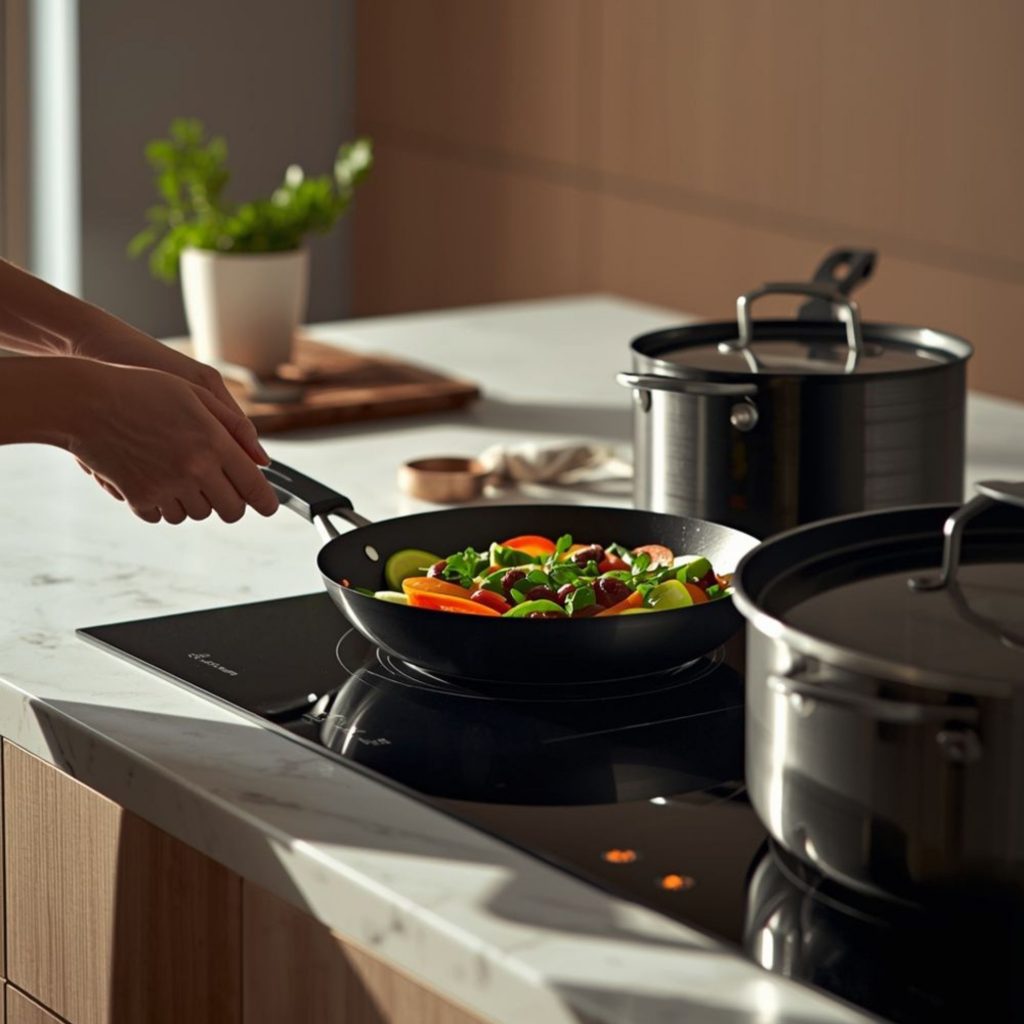
- Importância de Controlar Fumos e Odores | Fonte: Pinterest
The Importance of Functional Planning in an Open-Concept Layout
As mentioned earlier, it is essential for each zone to be clearly defined so that the integration of the different areas does not compromise the function of each one. From the outset, it should be established which area will be dedicated to meal preparation, leisure, and dining, ensuring that when the space is designed, these functions coexist without interference, while preserving comfort and the logic of daily life.
In open-concept kitchens, islands and peninsulas play a structural role, organizing the space and establishing a balanced relationship between countertops, social areas, and circulation paths. They are an excellent way to create a degree of separation without fully isolating the area. Another option for subtly defining different areas is the use of elements such as rugs, lighting, or even furniture.
Comfort in daily use also depends on thoughtful ergonomic decisions. Appropriate heights, balanced distances, and integrated technological solutions, from efficient ventilation systems to smart appliances, make the kitchen more intuitive and functional without compromising aesthetics. When integrated well, technology serves the space quietly and discreetly, elevating the overall experience of using it.
Finally, strategic storage is essential in an open-concept layout, where everything is visible. Well-planned storage systems and discreet support spaces make it possible to maintain order and avoid visual clutter, ensuring that the kitchen remains organized and integrated within the broader social area.
-
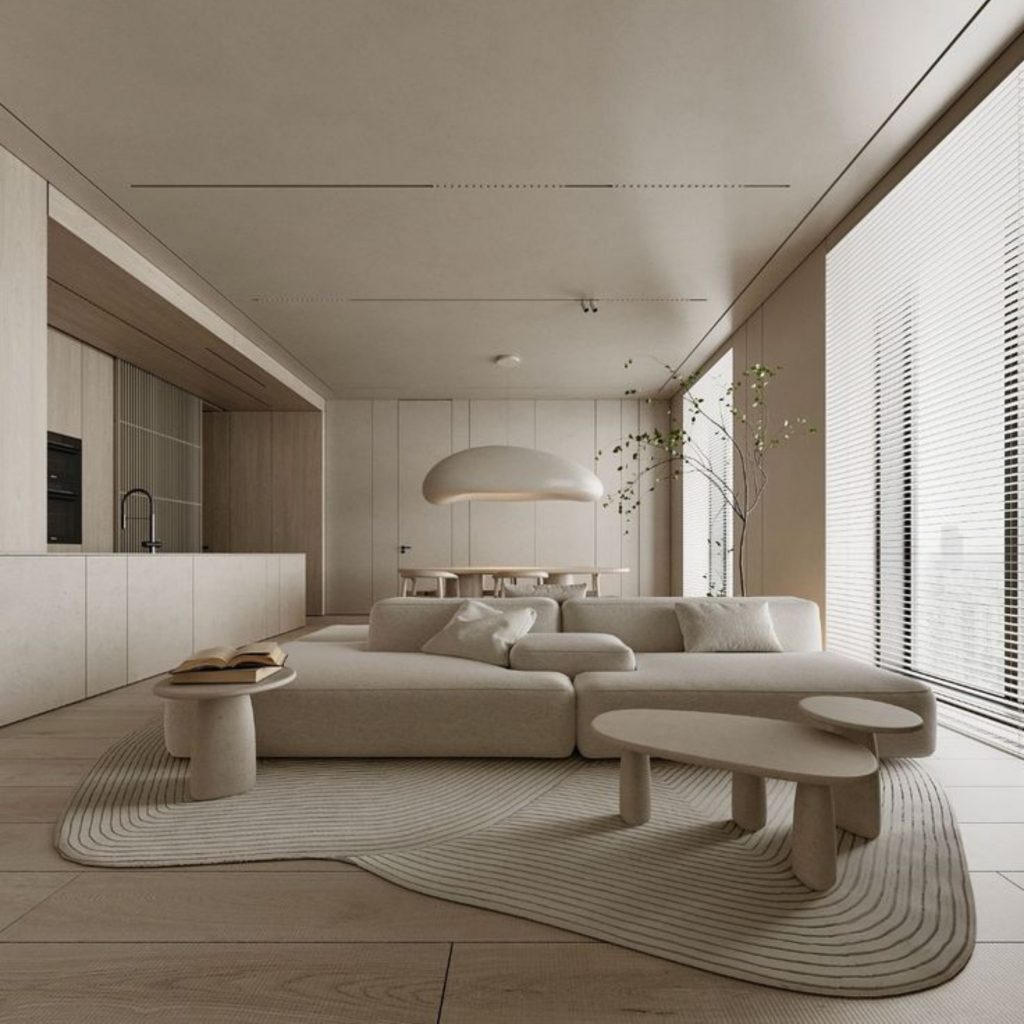
- Delimitação da Área Através de Tapetes e Mobiliário | Fonte: Pinterest
-
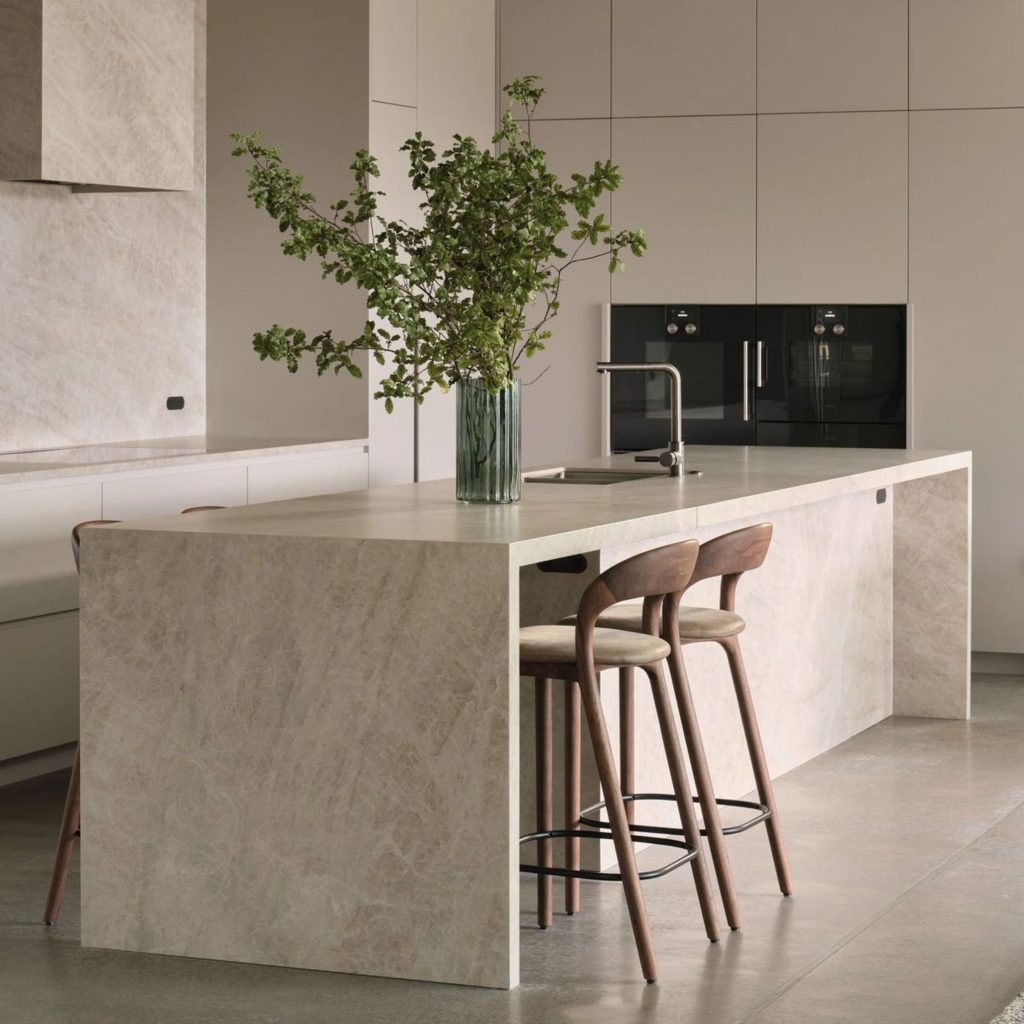
- Ilha de Cozinha como Divisor do Espaço | Fonte: Pinterest
A well-designed open-concept kitchen is not measured by how open it is, but by how well it supports daily life. When the planning is rigorous, the space gains order and an elegance that endures, even when the home is in use.