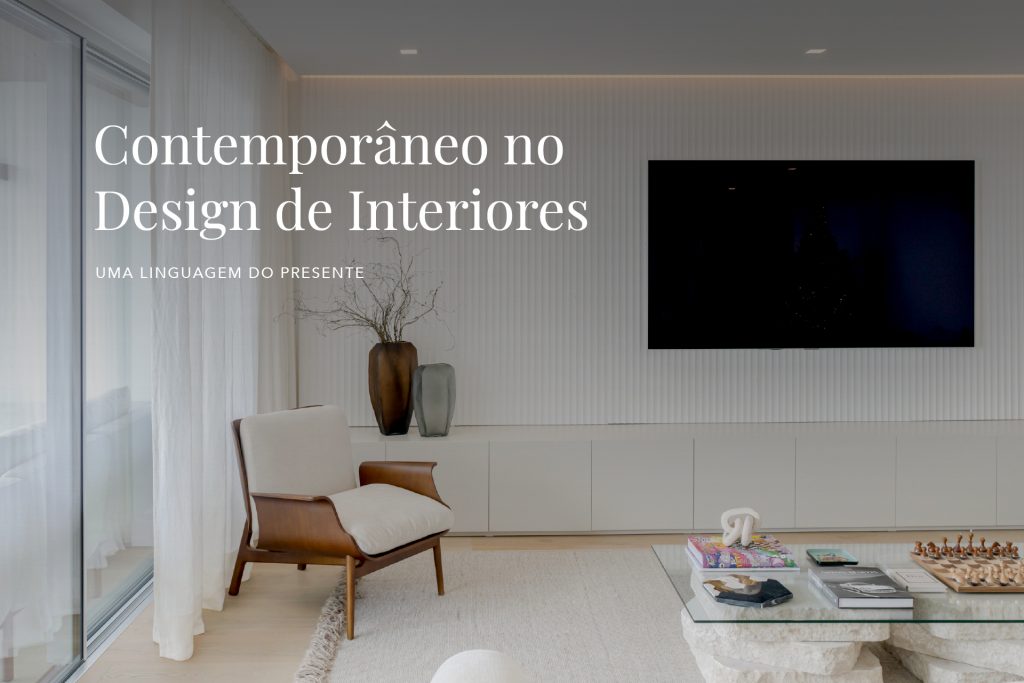
In recent years, the term “contemporary” seems to be on everyone’s lips. It is a modern concept present across different fields, from art and fashion to interior design. It is a living concept, constantly evolving, yet many people still do not fully understand what it means.
Many use “contemporary” and “modern” interchangeably, but that is not entirely accurate. Despite sharing some similarities, each of these styles has its own distinct characteristics.
Read the full article and discover more about the contemporary style.
-
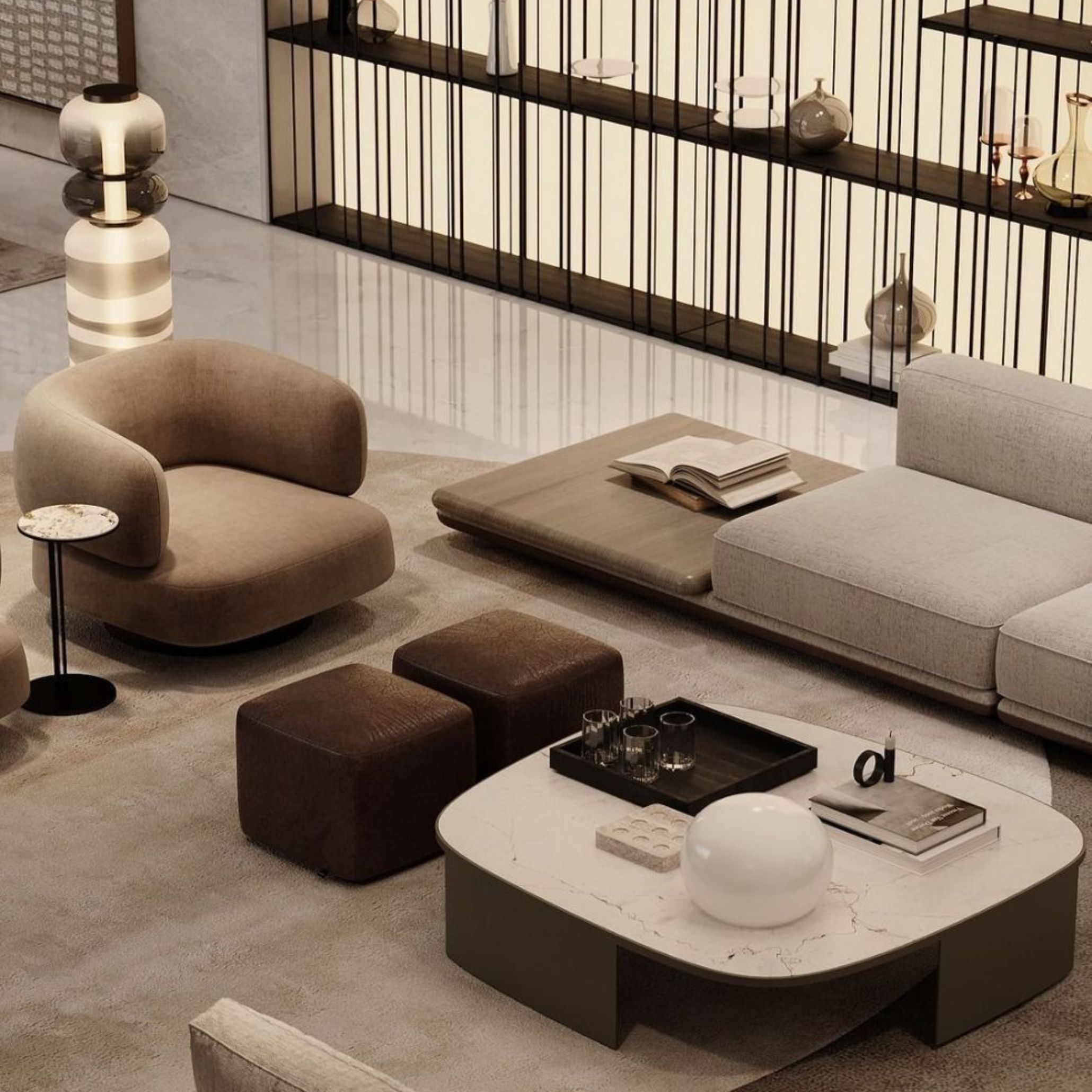
- O Contemporâneo Presente no Design de Interiores | Fonte: Pinterest
-
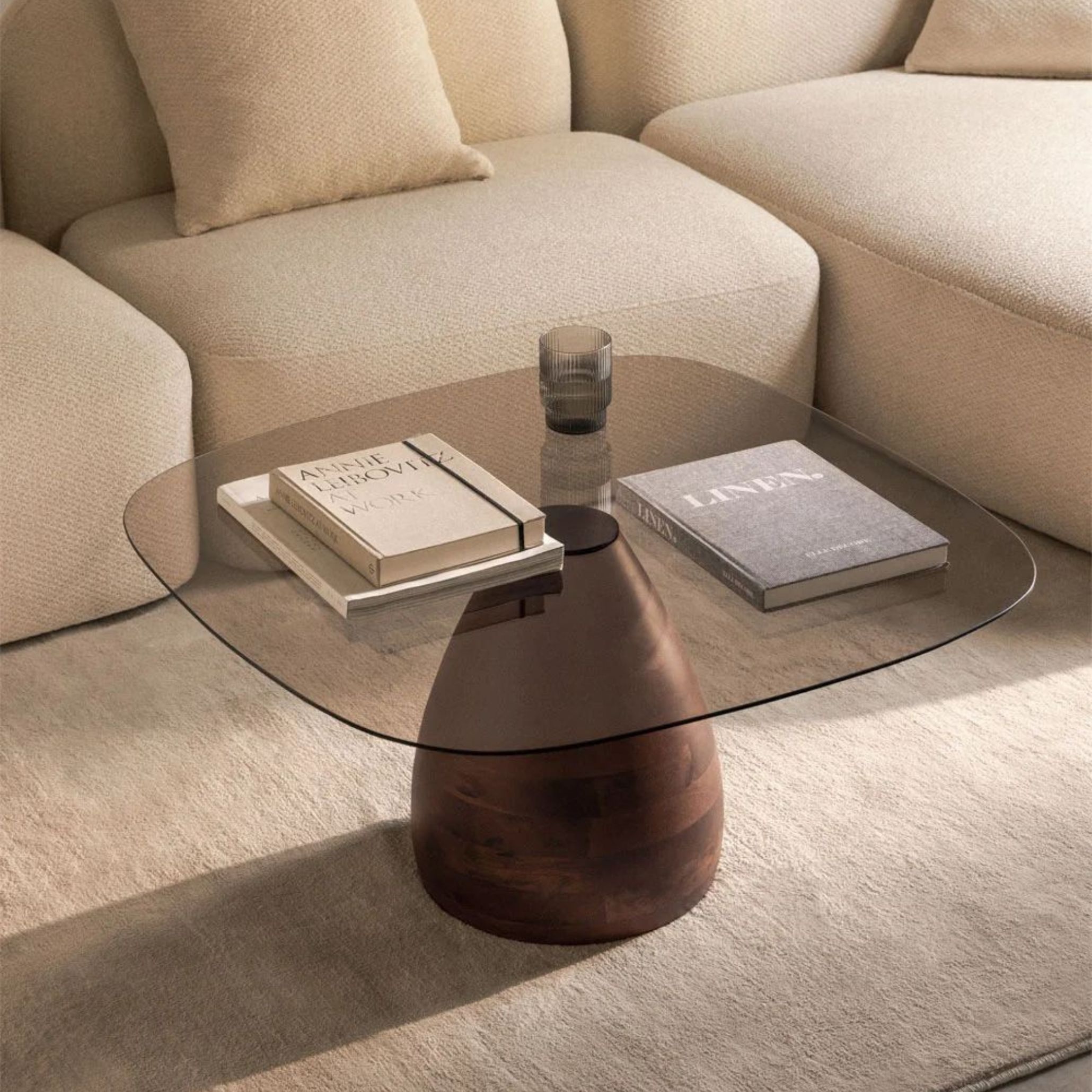
- Estilo Contemporâneo no Design de Interiores | Fonte: Pinterest
What Does Contemporary Mean?
The word “contemporary” comes from the Latin contemporaneus, meaning “of the same time” or “belonging to the same era.” In its most literal sense, it refers to everything that exists or is created in the present. However, when applied to fields such as art or interior design, the concept is used to describe a trend that emerged out of postmodernism.
“Contemporary” refers to constant change, and for that reason, it is not a closed style with a fixed visual language, as is the case with most interior design styles. This style is defined by its ability to evolve, absorbing a wide range of influences while keeping pace with cultural shifts and new ways of inhabiting space.
In architecture, art, and design, contemporary style manifests itself as a current reading of space, where function, aesthetics, and experience coexist naturally. Rather than following rigid codes, it values creative freedom and attention to detail. It is this ability to translate the present, without being tied to a specific era, that makes contemporary a language that feels current and, at the same time, surprisingly timeless.
-
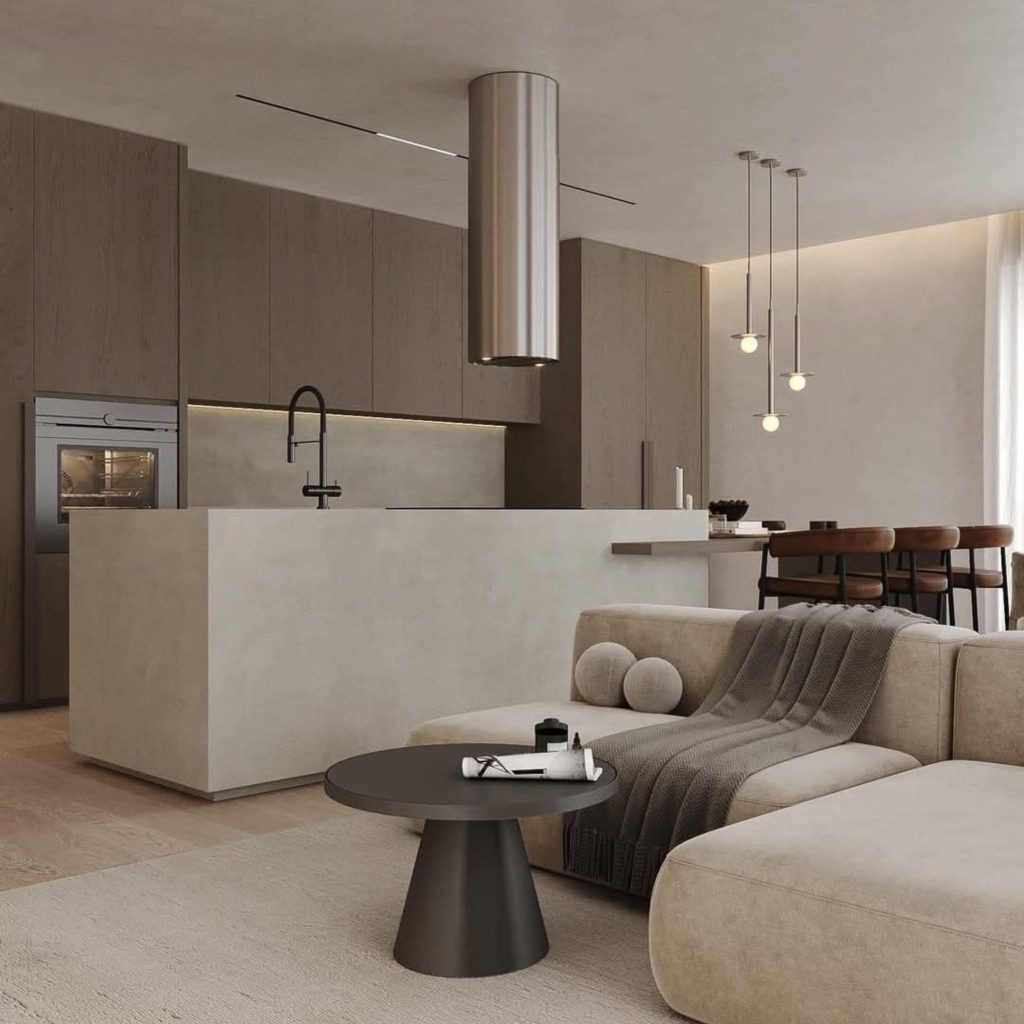
- Um Open Space Característico do Estilo Contemporâneo | Fonte: Pinterest
-
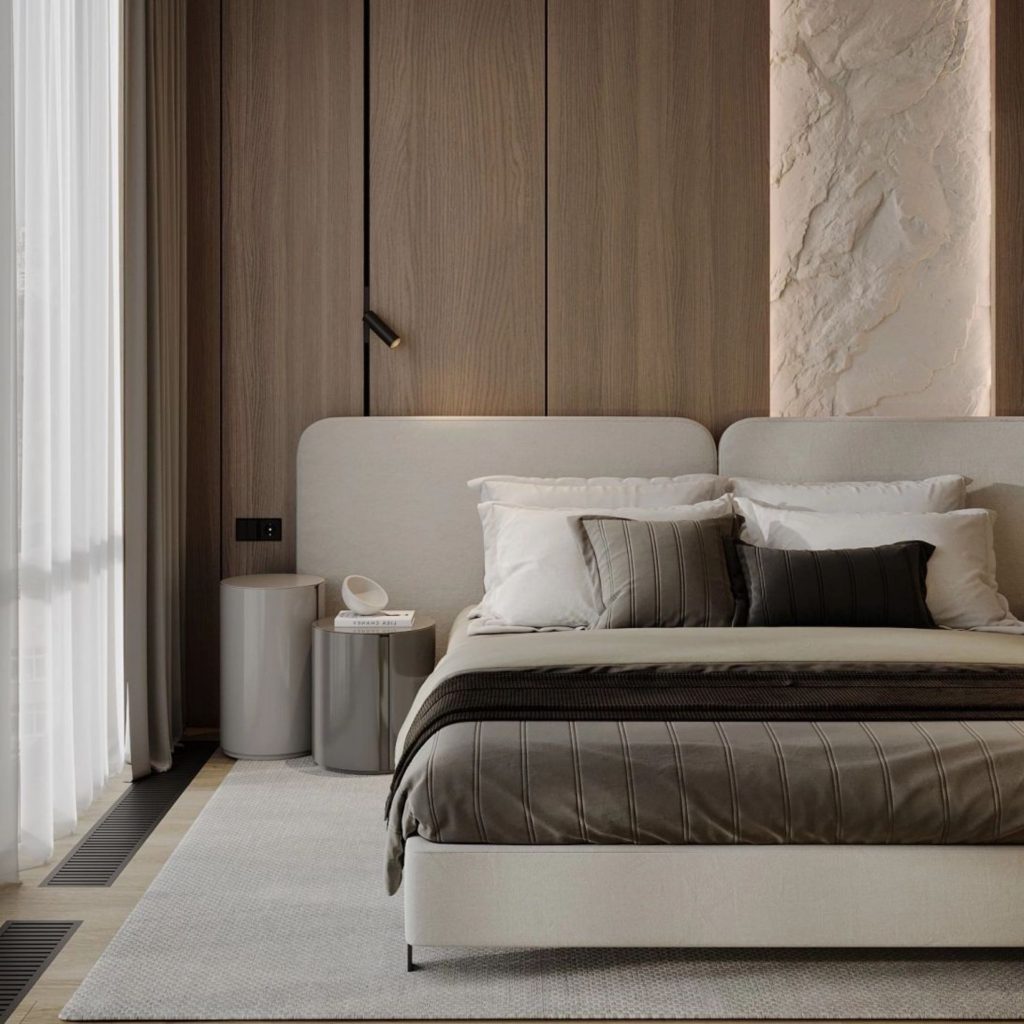
- Decoração de Quarto num Estilo Contemporâneo | Fonte: Pinterest
-
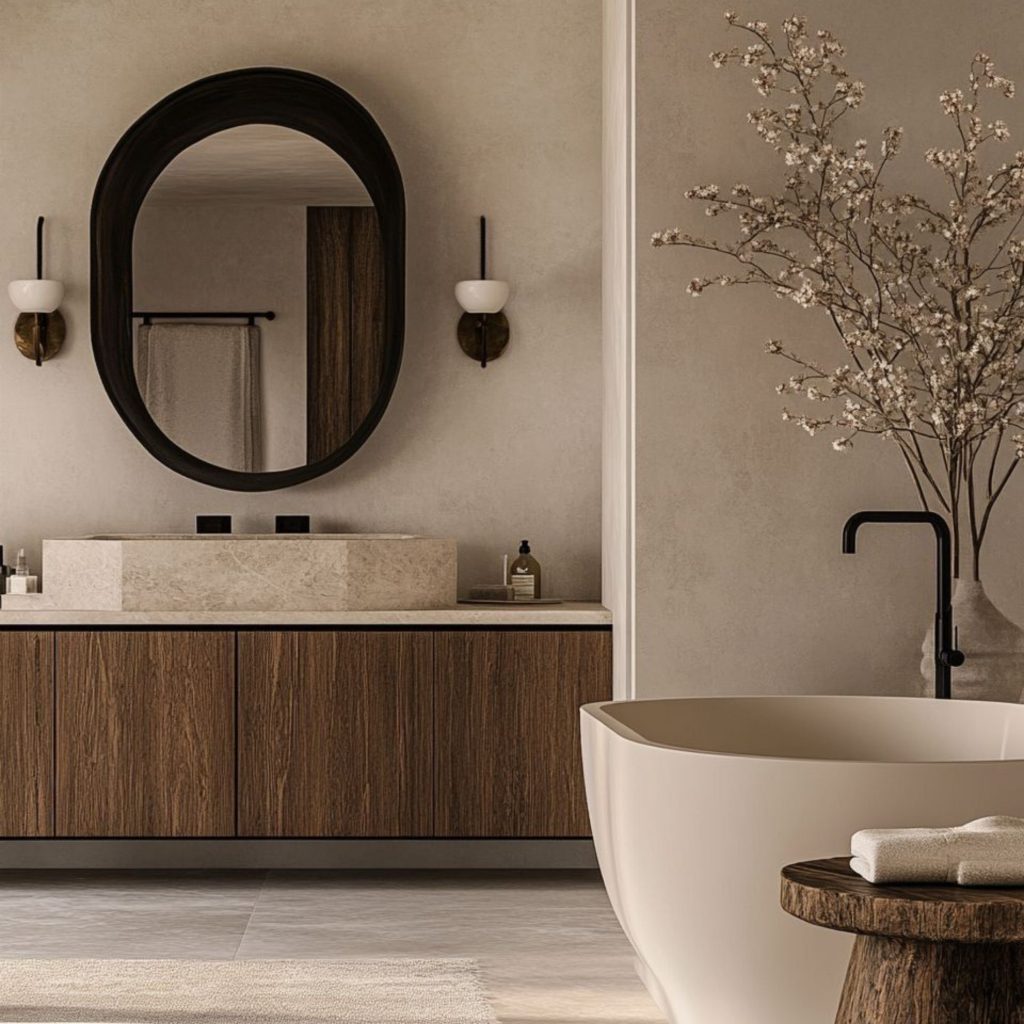
- Um Estilo Capaz de Aboserver Diversas Influências | Fonte: Pinterest
Main Characteristics of Contemporary Style
Contemporary style is defined by a refined and highly balanced aesthetic, designed to respond to the priorities of today’s world. In terms of materials, it favors noble raw materials such as wood, stone, metal, and glass, often combined with sensitivity to create texture and depth without excess.
It is grounded in clean lines and well-resolved proportions, creating spaces that feel clear and visually cohesive. The foundation tends to be neutral and intentional, with soft palettes, continuous surfaces, and a sense of order. At the same time, despite its minimalist essence, contemporary style values contrast and presence through striking pieces that serve as focal points within the space. These contrasts may appear through a work of art or a furniture piece with a stronger visual presence, but in most cases, interior designers tend to favor sculptural lighting pieces.
Another hallmark of this type of interior is a more open and fluid layout, which is why open-concept environments are so often found in homes that embrace this style.
-
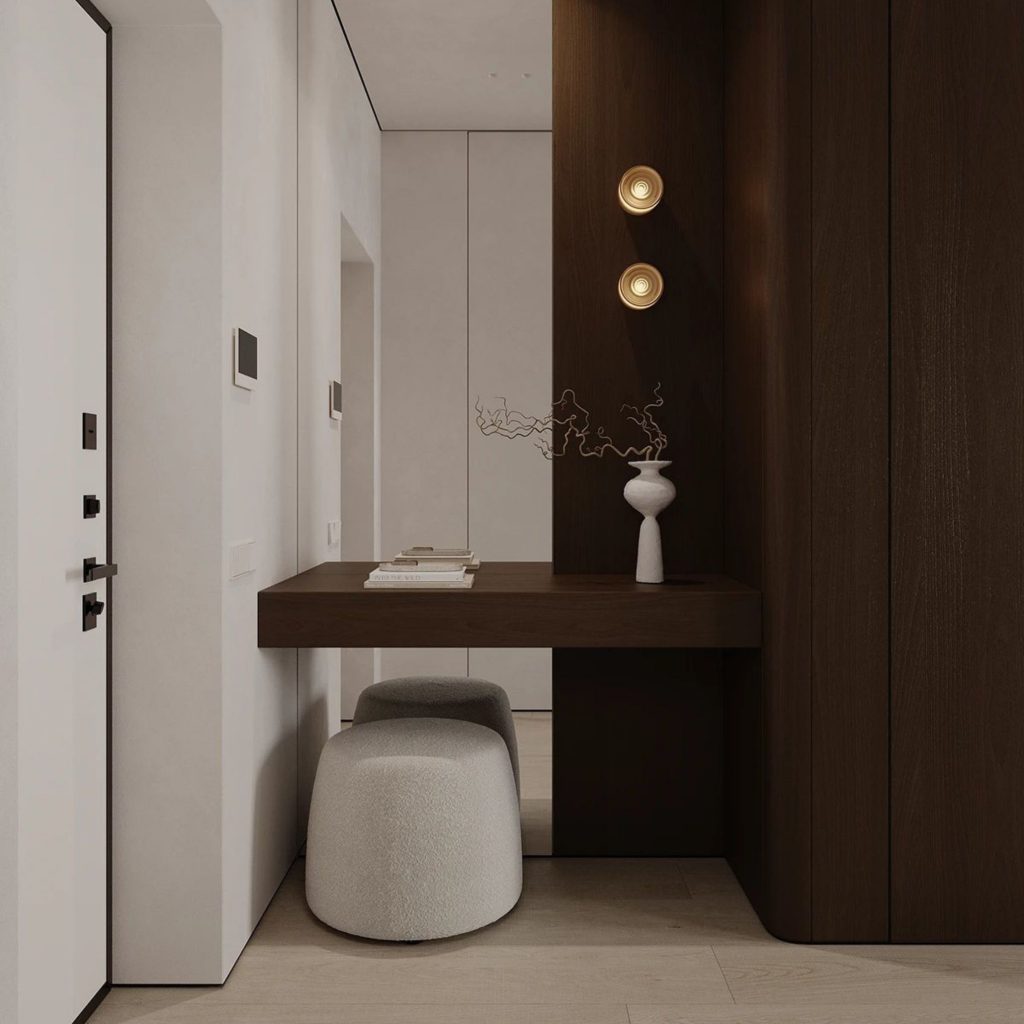
- Ambientes Neutros | Fonte: Pinterest
-
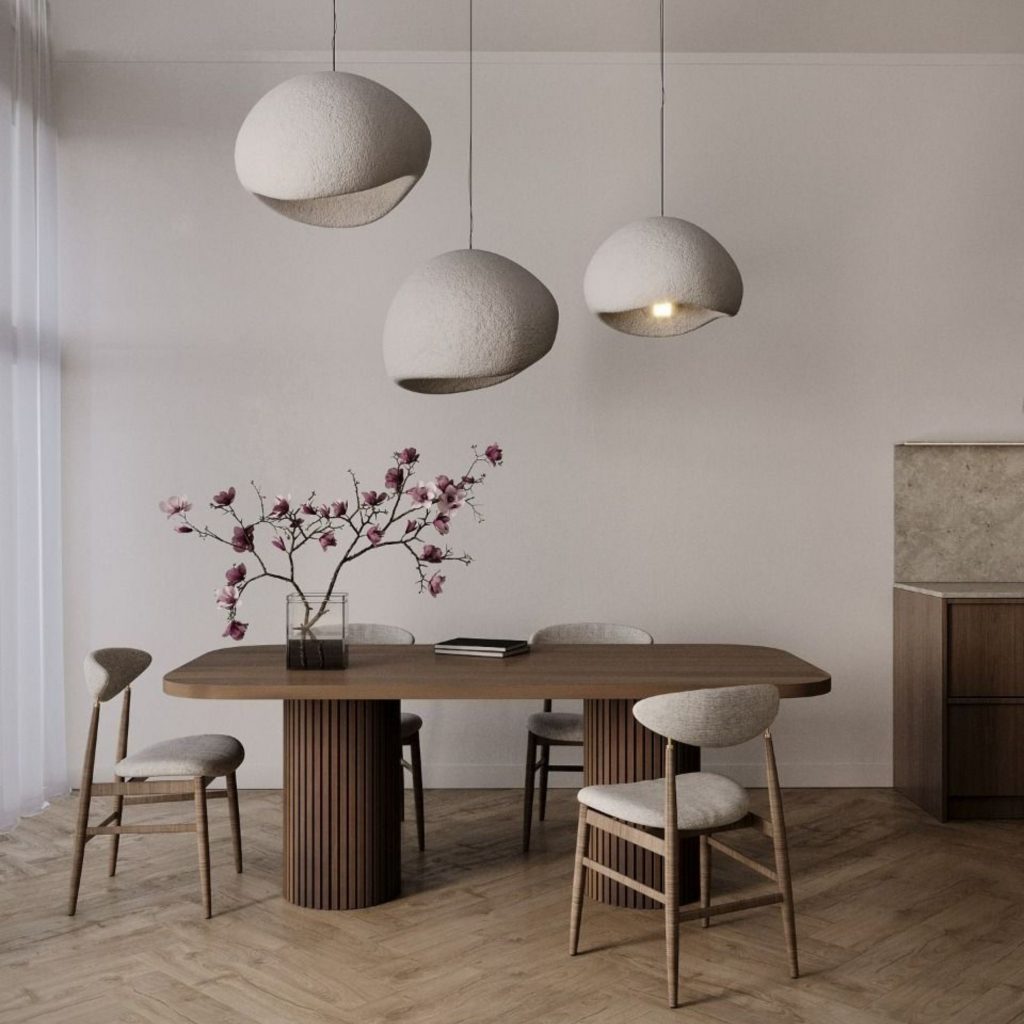
- Iluminação Escultóricas como Peça de Destaque | Fonte: Pinterest
Contemporary Style vs. Modern Style: What Is the Difference?
The distinction between contemporary style and modern style continues to create some confusion, especially because both share a clean aesthetic. However, the difference between the two is clear and lies essentially in their relationship with time. Contemporary is an interpretation of the present: it adapts to trends, preferences, and new ways of living, evolving continuously and absorbing different influences. Modern style, on the other hand, is tied to a specific historical period – the modernist movement of the twentieth century – and therefore maintains a more stable language, faithful to the principles that defined that movement.
In practical terms, these styles can be identified through their design and composition. Contemporary style allows for greater fluidity and freedom in design, making curved silhouettes and softer volumes common. There is a clear intention to create balance without rigidity, allowing for subtle contrasts and a more sensory reading of space. In modern style, strong straight lines, clearly defined geometries, and a more rigid composition prevail, where form follows function in a more direct and rational way.
To see this approach in practice, one only has to look at the Imperfeição da Matéria project, where the open-concept area of the house reveals a clearly contemporary interpretation, built on a refined and serene foundation, softened by organic contours and a carefully controlled sense of flow. The neutral palette and attention to detail create the overall sophistication, while one character-defining accent – in this case, the coffee table -adds depth without disrupting the harmony.
-
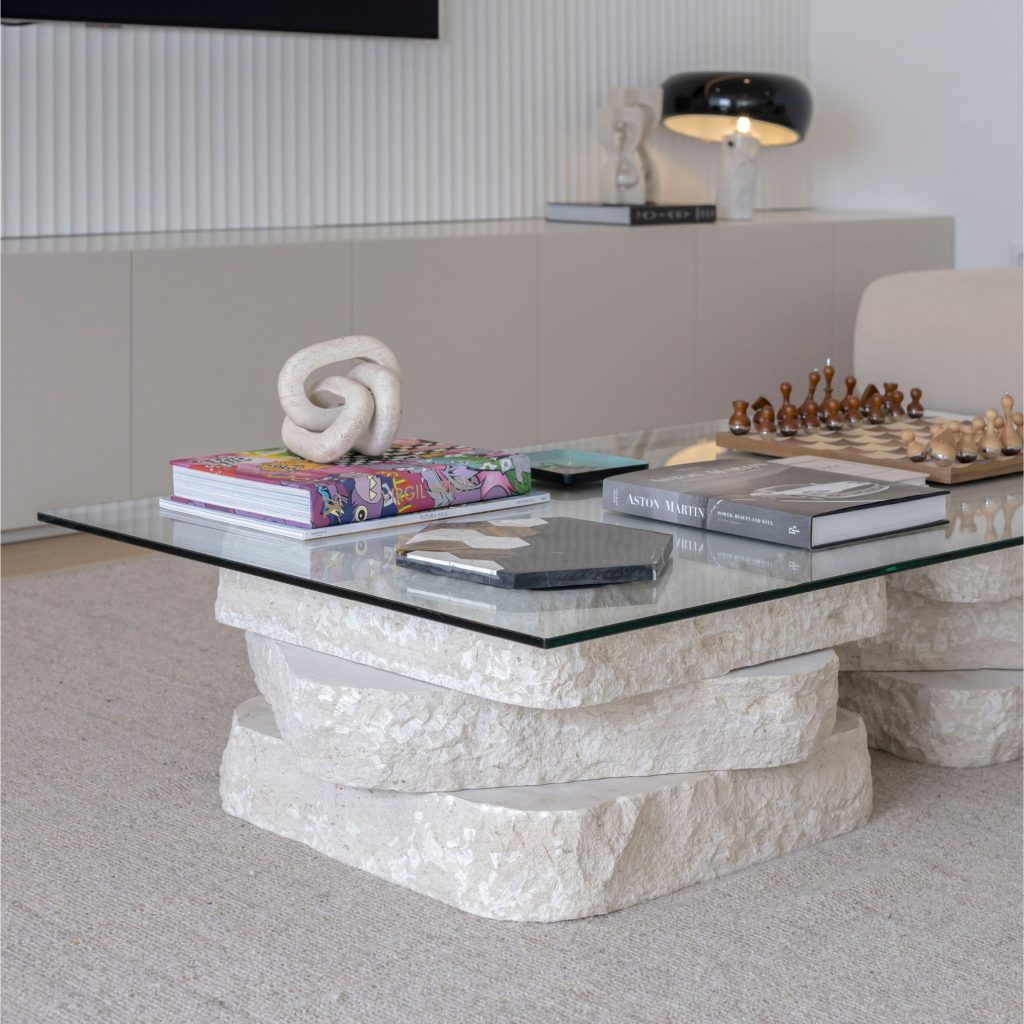
- Mesa de Centro como Elemento de Foco da Sala de Estar
-
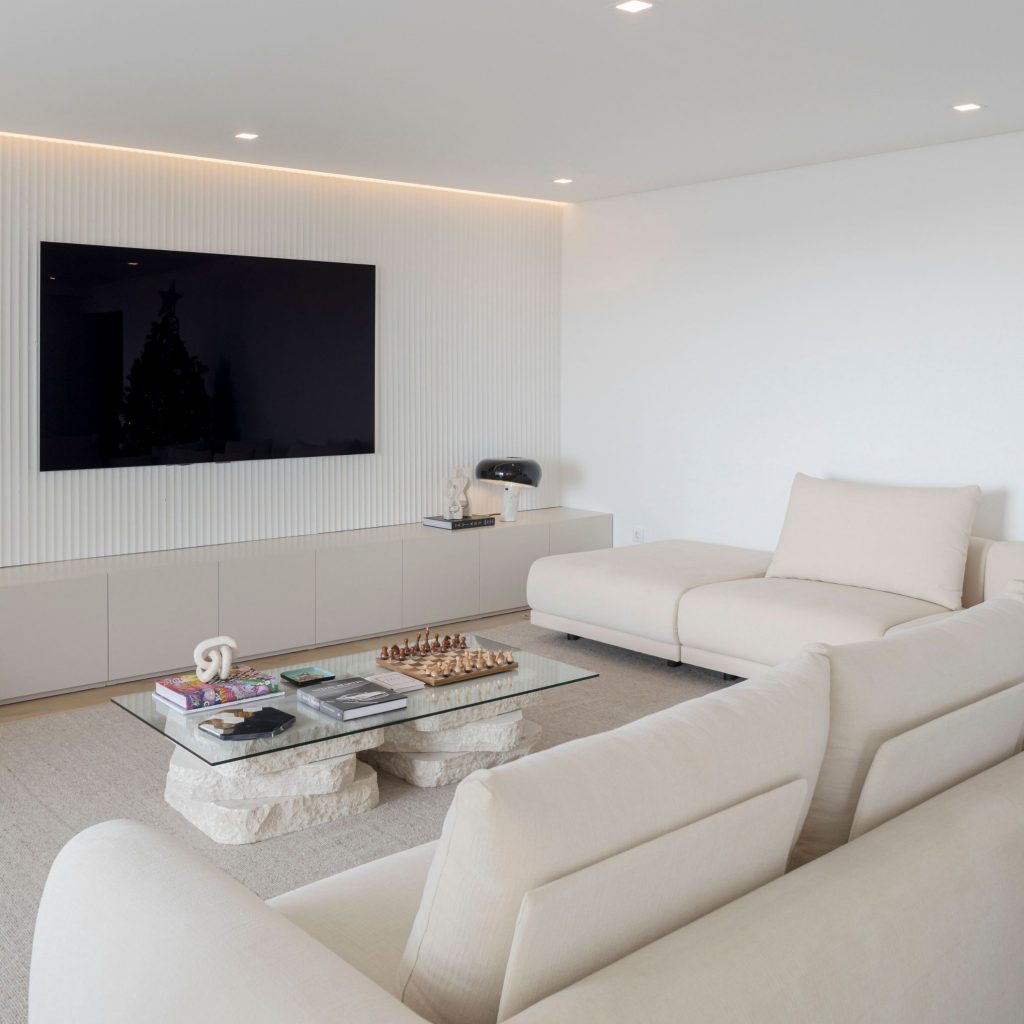
- Sala de Estar Contemporânea
To speak of contemporary style is, above all, to speak of the present. It is a language built from the now, one that follows cultural and social transformations and reflects new ways of living. More than a trend, the contemporary establishes itself as a dynamic expression of our time.