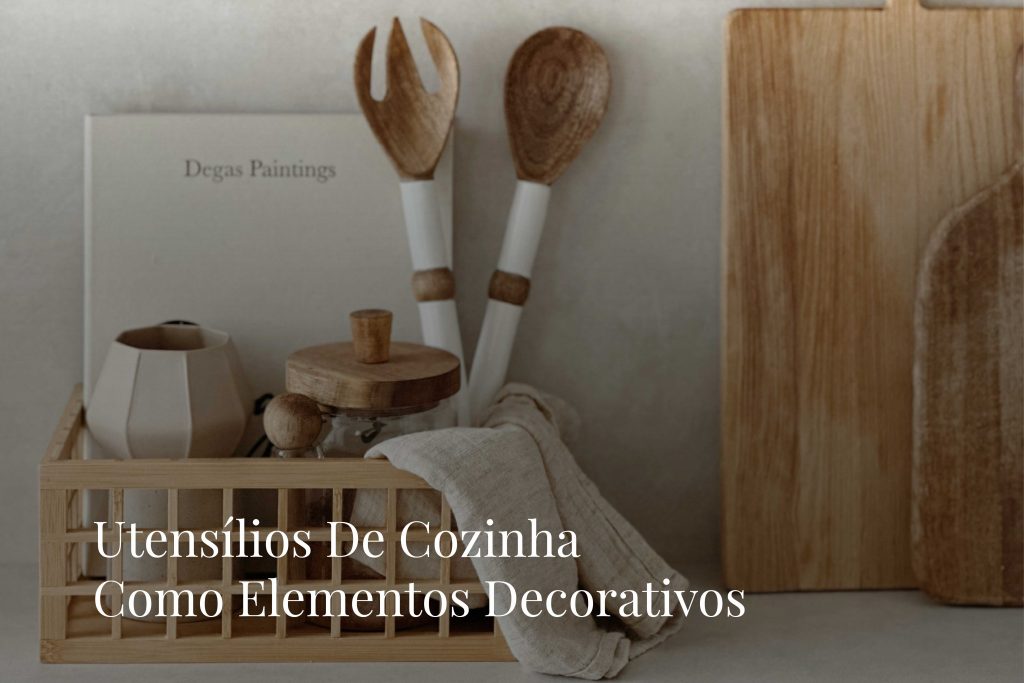
Kitchen utensils are part of our everyday routine, yet we rarely recognize their decorative potential. For years, we’ve been told they belong behind closed cabinet doors, stored out of sight, as though their presence disrupted the harmony of the space. But what if, instead of hiding them, we embraced them as part of the character and identity of modern kitchens?
If a kitchen is designed strategically, these objects can become more than simply functional and begin to contribute to the aesthetic language of the space. If you’re tired of hiding everything you use every day, this article will show you how to make these elements a natural part of your décor without compromising the order or elegance of the room.
-
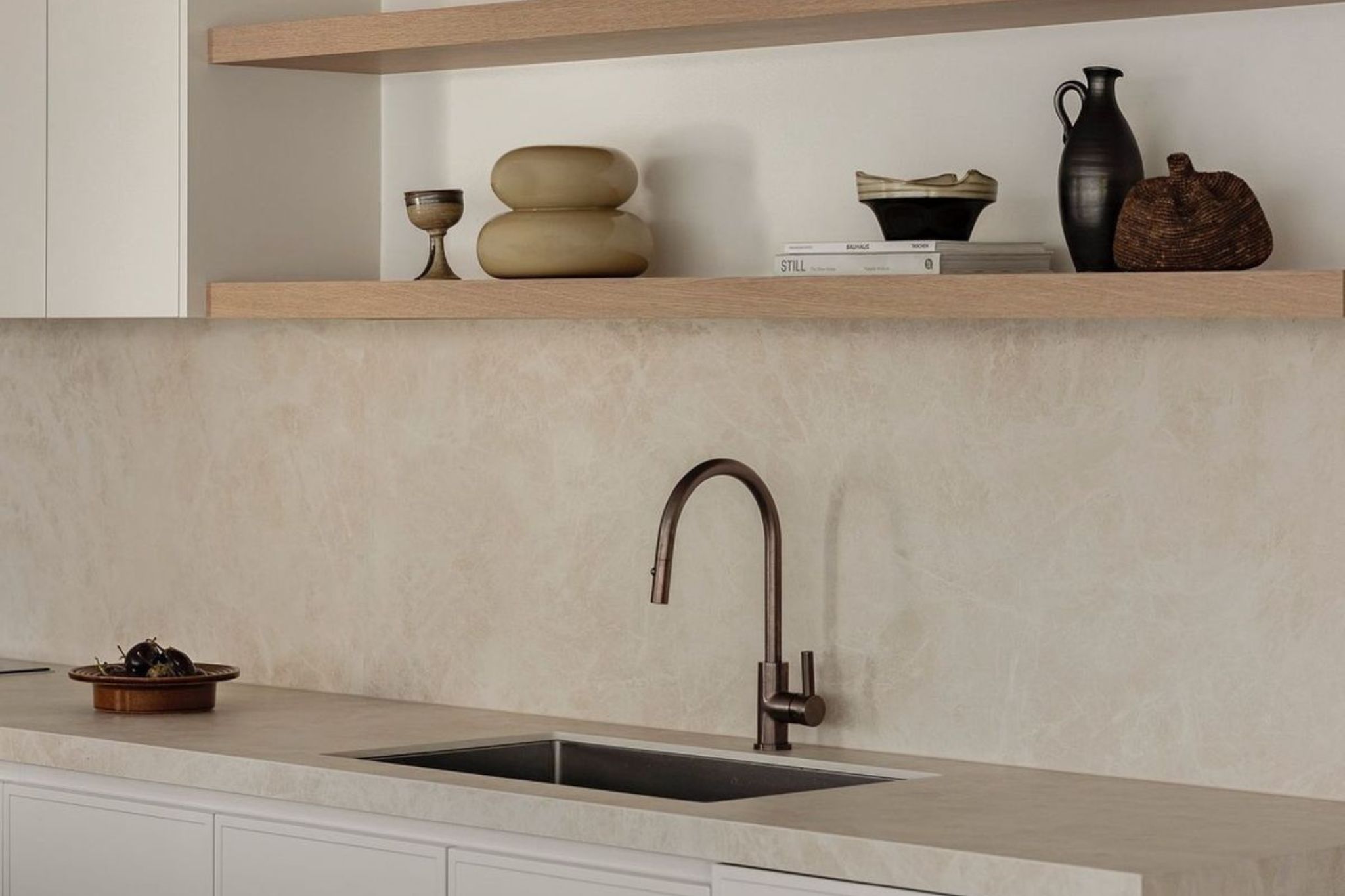
- Utensílios de Cozinha Utilizados na Decoração de uma Cozinha Moderna | Fonte: Pinterest
Which Kitchen Utensils Have Decorative Potential?
Although kitchen utensils can play an important role in decorating a space, that doesn’t mean every item has enough aesthetic presence on its own to contribute to the overall atmosphere. For a utensil to blend harmoniously into the kitchen, it is important that its selection is intentional.
Solid wood cutting boards or ceramic pots, for example, combine functionality with visual appeal and don’t require additional decorative elements for the space to feel complete. Likewise, small appliances with a refined appearance, such as a kettle or toaster, can reveal their decorative potential and contribute to the overall design of the room.
Smaller-scale elements can also contribute to the kitchen’s visual composition. An elegant set of cutlery displayed on the countertop, bowls, mortars and pestles, or metal spoons and ladles arranged beside the stove can enhance the character of the space, especially when attention is also given to how they are displayed. In more minimalist kitchen cabinetry, for example, a simple, understated holder reinforces a minimalist aesthetic, while placing utensils inside a ceramic vase introduces an artisanal charm to the room.
-
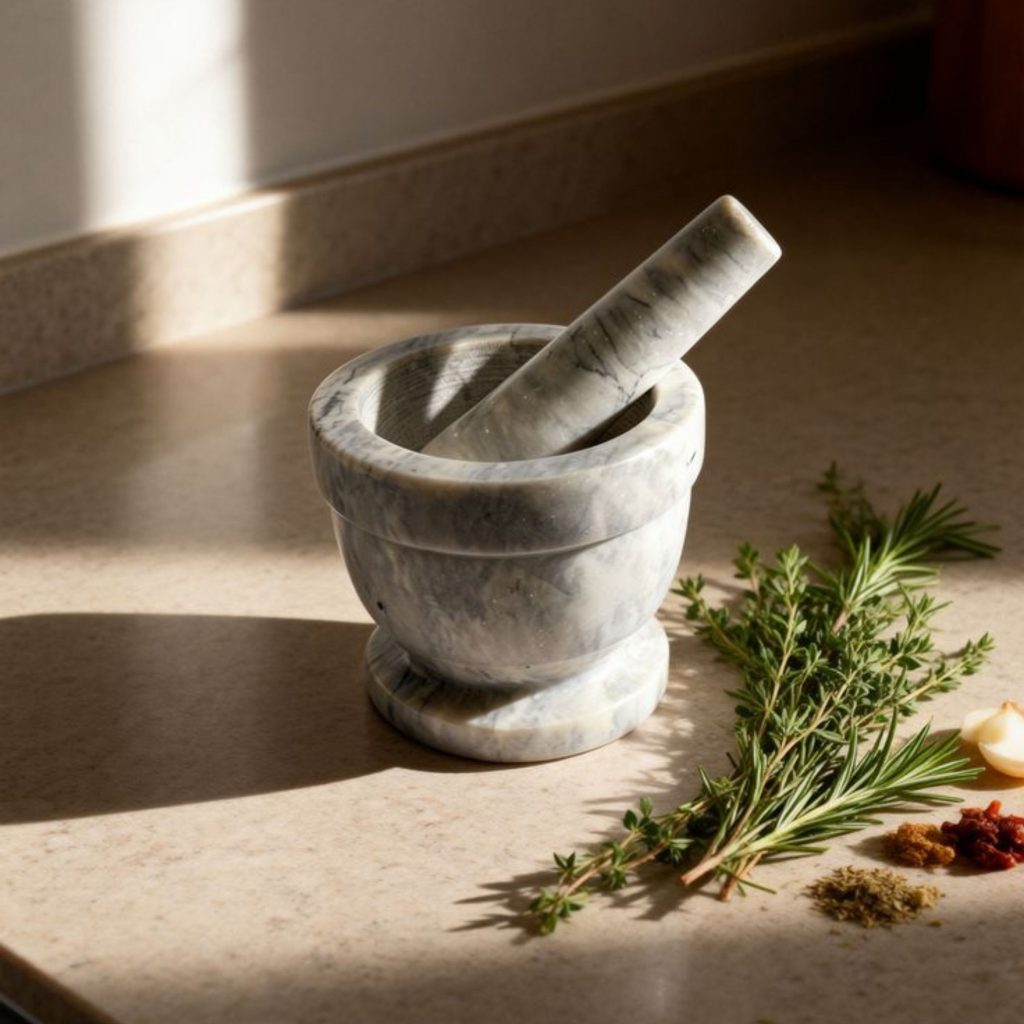
- Almofariz como Elemento Decorativo | Fonte: Pinterest
-
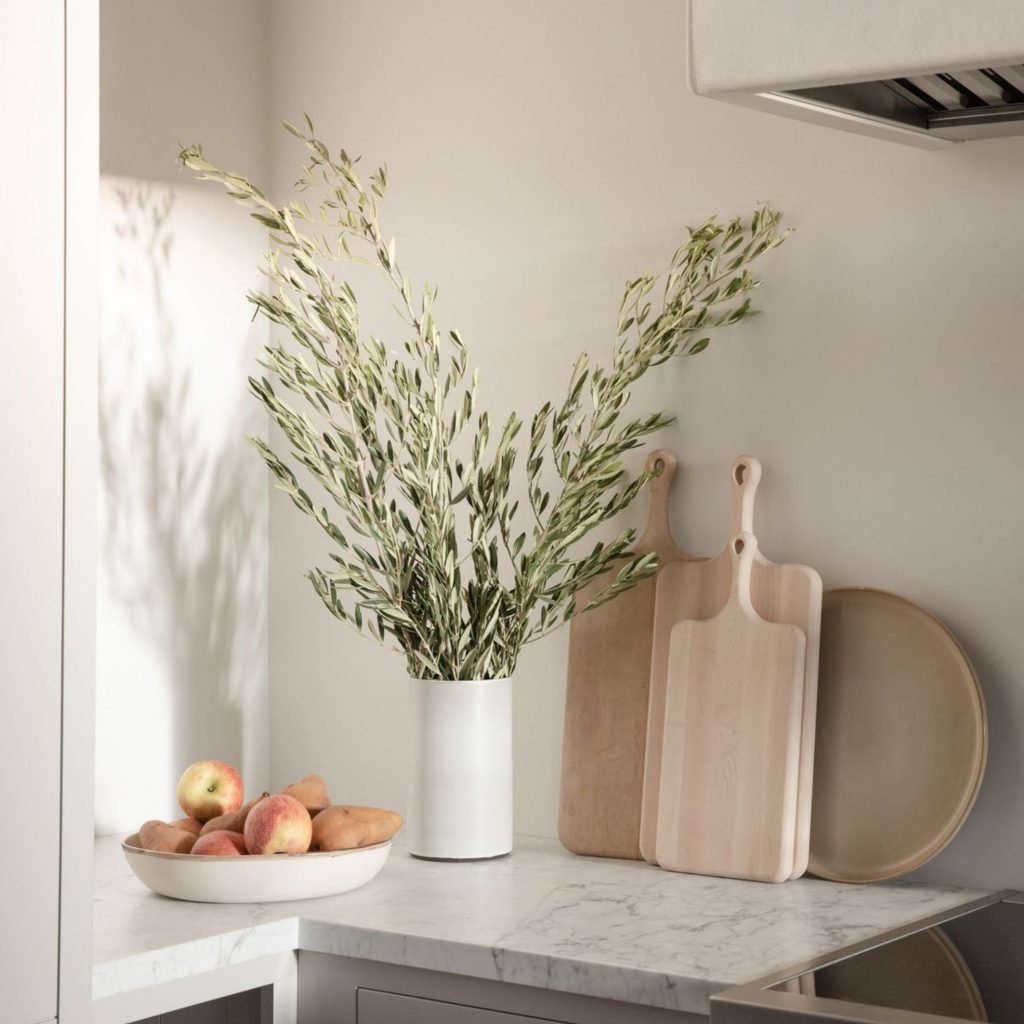
- Tábuas de Madeira incluídas na Decoração do Ambiente | Fonte: Pinterest
How to Display Kitchen Utensils Without Creating Visual Clutter
Having the freedom to keep kitchen utensils on display doesn’t mean everything should be left out without intention. In a visually balanced kitchen, the difference almost always lies in selection: display less, but display it better. Rather than scattering several objects across the countertop, create a single well-composed focal point where each element has both a purpose and a relationship with the others.
To make the composition more harmonious, it’s worth grouping pieces by material, color, or function while working with different heights and volumes to create a more thoughtful visual arrangement. A cutting board leaning vertically, a container filled with utensils, and a ceramic piece, for example, can form a simple yet expressive composition. In modern kitchens, this balance between presence and restraint is essential for allowing objects to add character without compromising the serenity of the space.
The most common mistake is excess, since having too many elements on display tends to create visual distraction and make the countertop appear congested. Kitchen cabinetry also stands out more when there is enough empty space to allow the eye to rest and each piece to assert itself naturally.
-
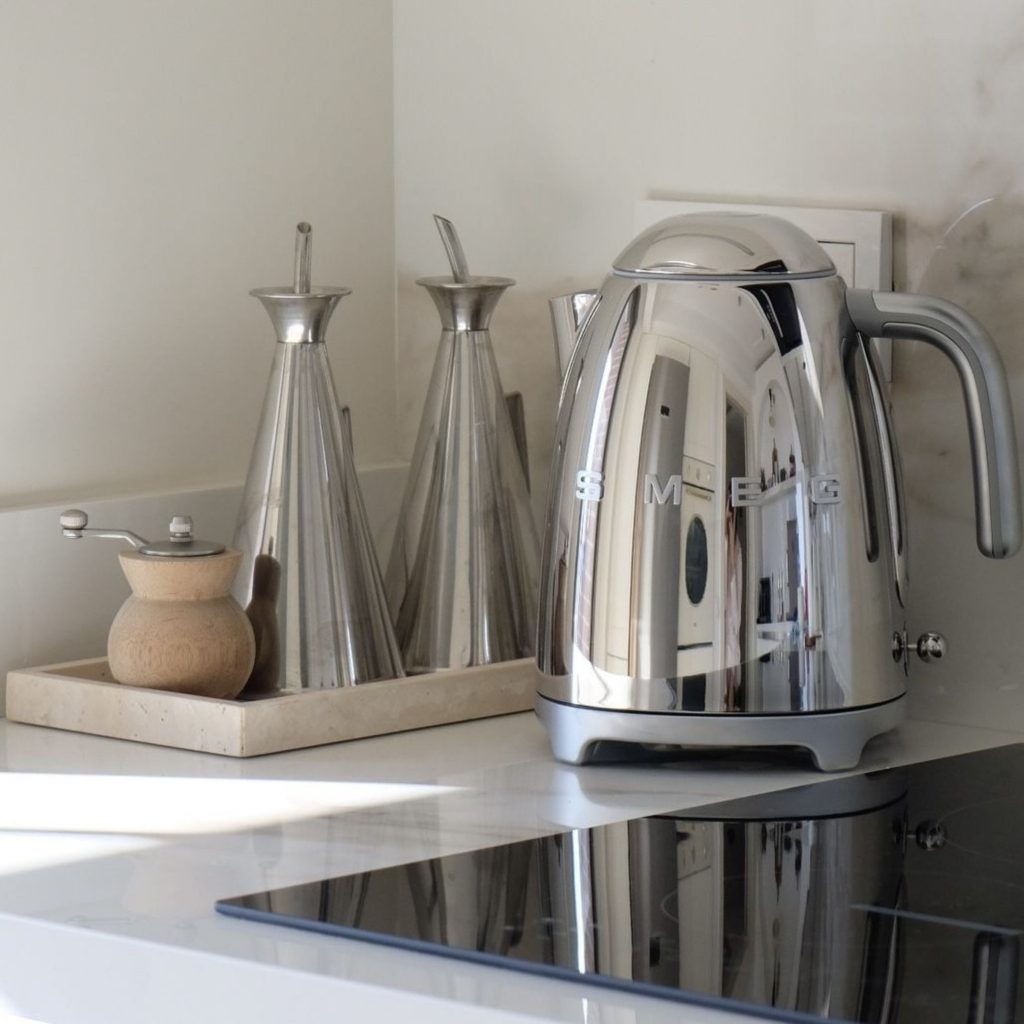
- Utensílios de Cozinha Agrupados por Material | Fonte: Pinterest
-
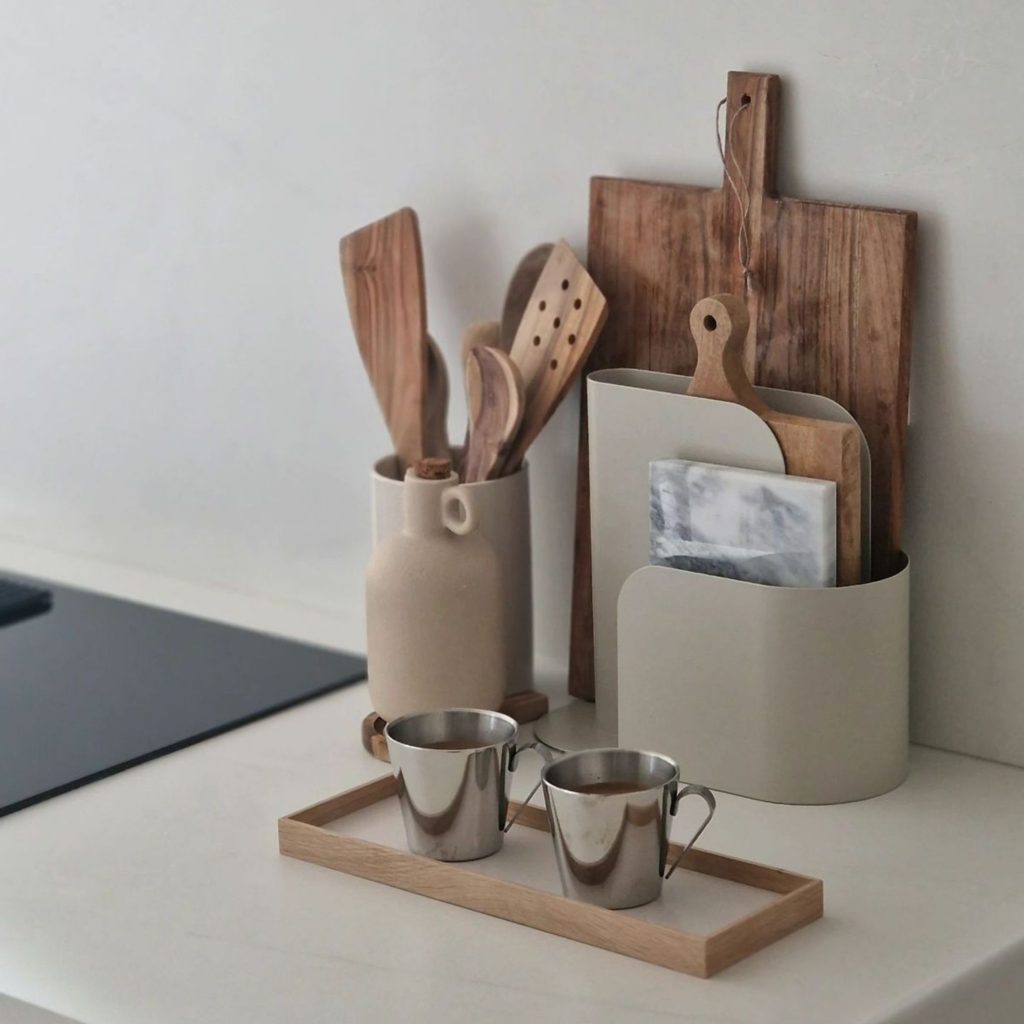
- Composição de Utensílios de Cozinha num Único Ponto da Bancada | Fonte: Pinterest
Design Styles and the Kitchen Utensils That Complement Them
The way kitchen utensils integrate into a space depends largely on the kitchen’s own design language. More than simply choosing beautiful objects individually, it’s important to understand how they interact with the overall environment.
In modern kitchens, the selection of kitchen utensils is generally more restrained, prioritizing simple forms and neutral tones. In the ‘Waterline‘ project, for example, the visible objects contribute subtly to the décor, reinforcing the human presence within the space and making it feel more lived-in. In the ‘Salty Breeze‘ project, the selection is more restrained, yet equally intentional, resulting in a balanced composition.
In other design styles, the choice of kitchen utensils can follow a more expressive approach. In Mediterranean interiors, terracotta pieces, natural fibers, and more rustic wooden boards stand out, introducing warmth and authenticity. On the other hand, kitchens with a more sophisticated industrial aesthetic favor finishes such as steel, iron, and solid wood.
Regardless of the decorative approach, what matters most is that the objects respect the language of the space and integrate naturally into the overall environment.
-
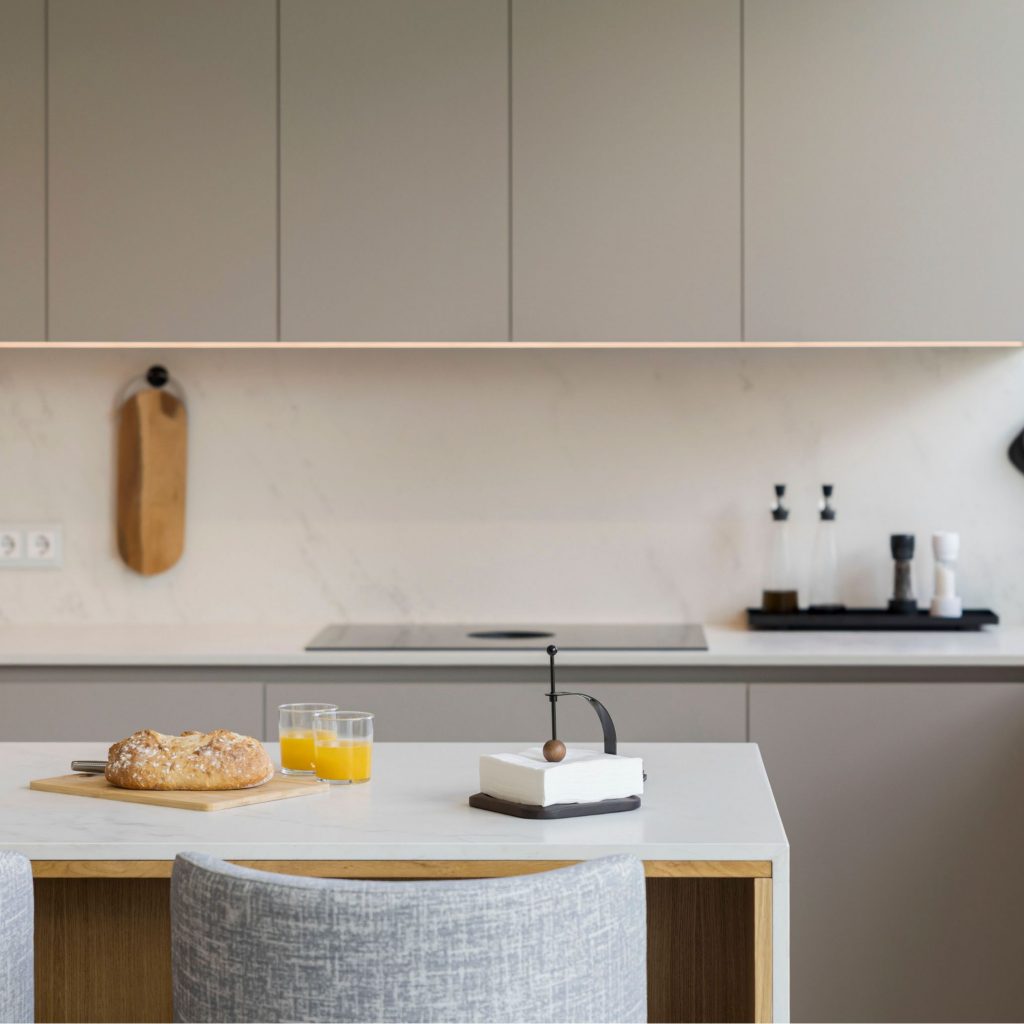
- Cozinha do Projeto “Linha de Água”
-
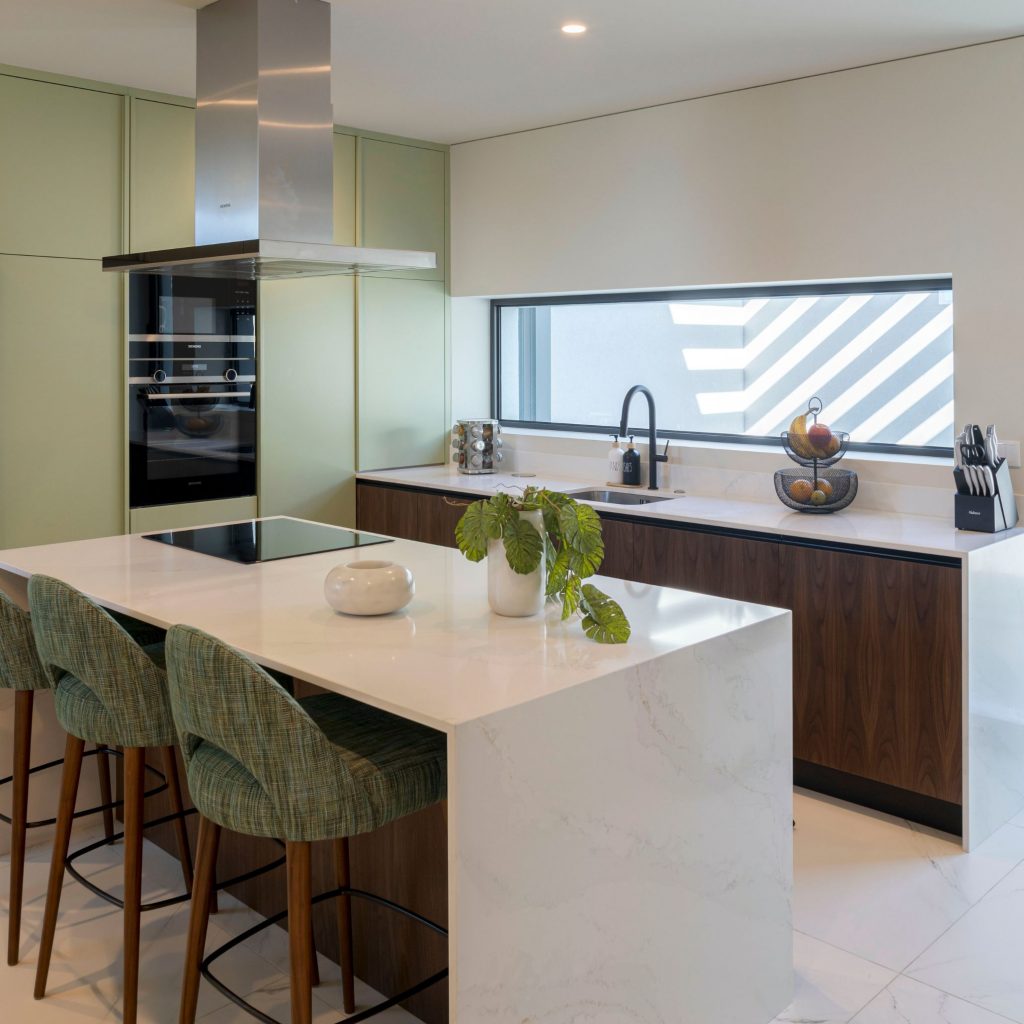
- Cozinha do Projeto “Varandas do Mar”
Incorporating kitchen utensils into your décor is a way to make the kitchen feel more authentic. Instead of hiding everything that is part of everyday life, you intentionally choose what deserves to remain visible.
This perspective naturally aligns with a more contemporary way of thinking about the home. If you’d like to understand how modern kitchens can transform not only the aesthetics but also the experience of your space, we invite you to continue exploring the topic. Click here and discover how this approach can redefine the way you enjoy your kitchen.